Project Overview
Project Goal:
- To create a visually compelling 3D animation that immerses the audience in a story of adventure.
- Through stylized characters and expressive environments, the project aims to evoke emotions and showcase advanced 3D modeling and animation techniques.
My Role: 3D Modeller & Animator
Collaborators:
- Zekun Wang – Animator & 3D Modeller
- Zobia Khalid – Wave Maker & Designer
- Yongcheng Zhang – Script & Video Editor
Built With:
- Maya (3D modeling & animation)
- Premiere Pro (video editing)
Work Time: 2 Months (October 2024 - December 2024)
Showcase:
Project Description
Bringing Set Sail Again to Life
Set Sail Again is a 3D animated short that tells a story of resilience and exploration. My role focused on creating expressive characters, immersive environments, and fluid animations to bring this vision to life. From early concept sketches to final renders, I worked on 3D modeling, texturing, rigging, and animation to ensure a cohesive visual style. The project aimed to balance stylized aesthetics with technical precision, using Maya for asset creation and Premiere Pro for post-production. Below, you’ll find a breakdown of key assets, including the Lighthouse, the Captain, and the Kitty, highlighting the modeling, texturing, and animation processes behind each element.
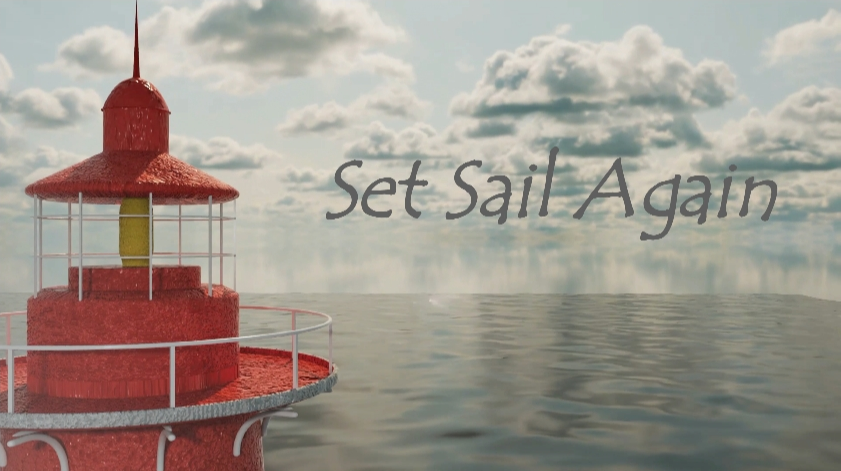
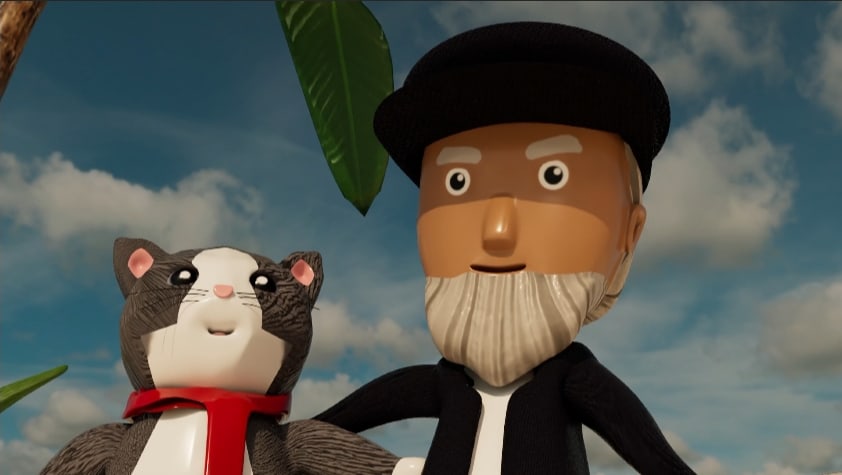
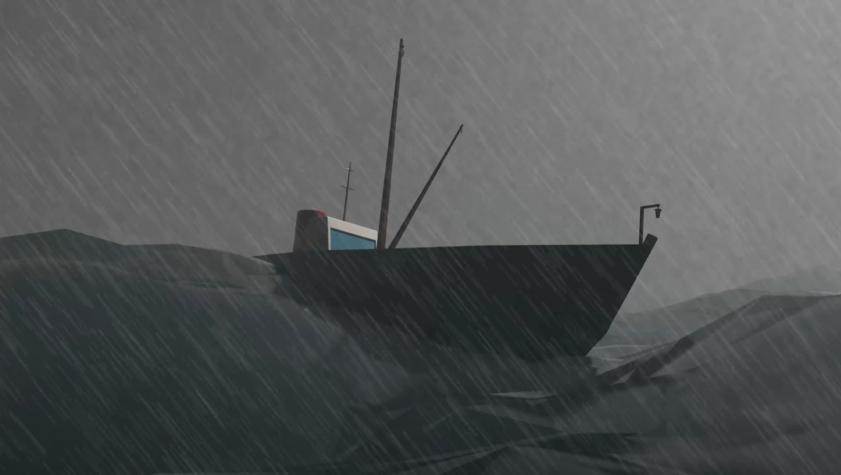
A collection of key moments from the animation
Design & Develop
Lighthouse
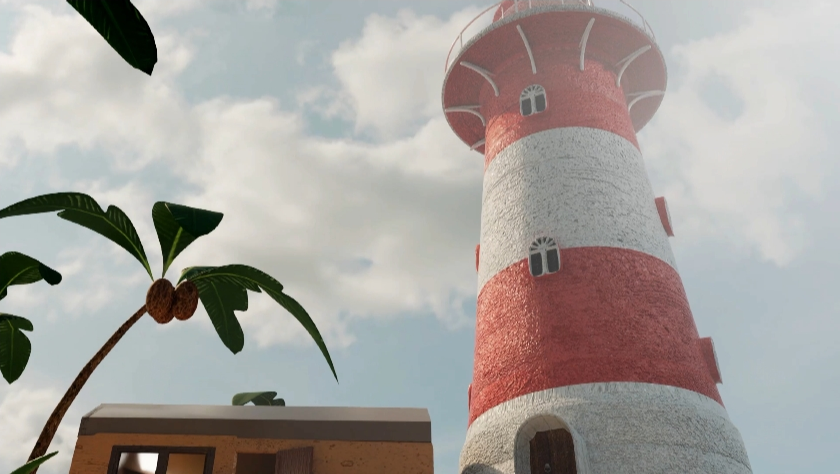
A towering lighthouse bathed in daylight, standing as a guiding landmark amid tropical surroundings
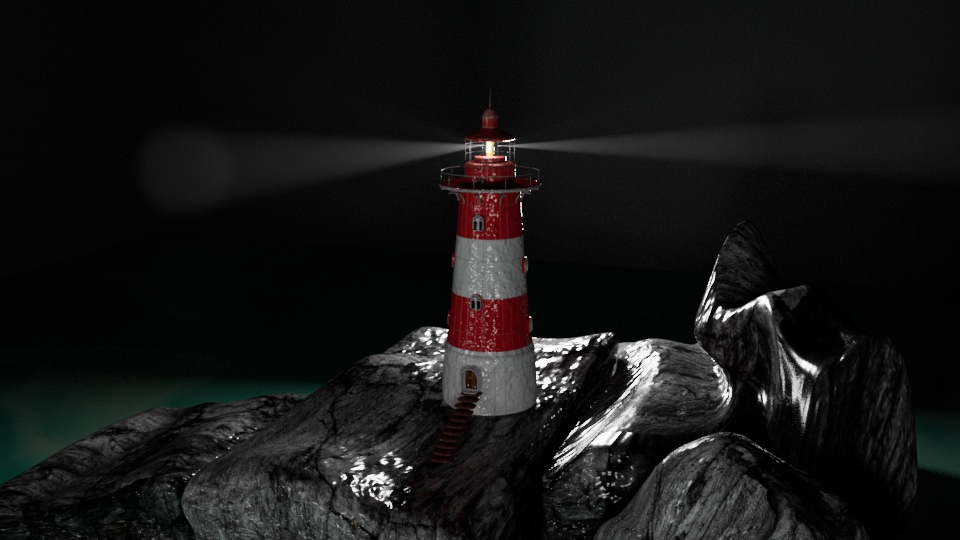
Lighthouse standing tall as an island landmark, its beams cutting through the darkness as a symbol of hope
The two images showcase the final renders of the lighthouse in different lighting conditions. The daytime scene captures the lighthouse standing tall as an island landmark, surrounded by palm trees and a serene environment.
In contrast, the nighttime scene highlights the lighthouse's powerful beams cutting through the darkness, serving as a guiding light. To achieve this, an HDRI lighting setup was used to enhance realism, while the lighthouse beam was carefully crafted to create a striking effect.
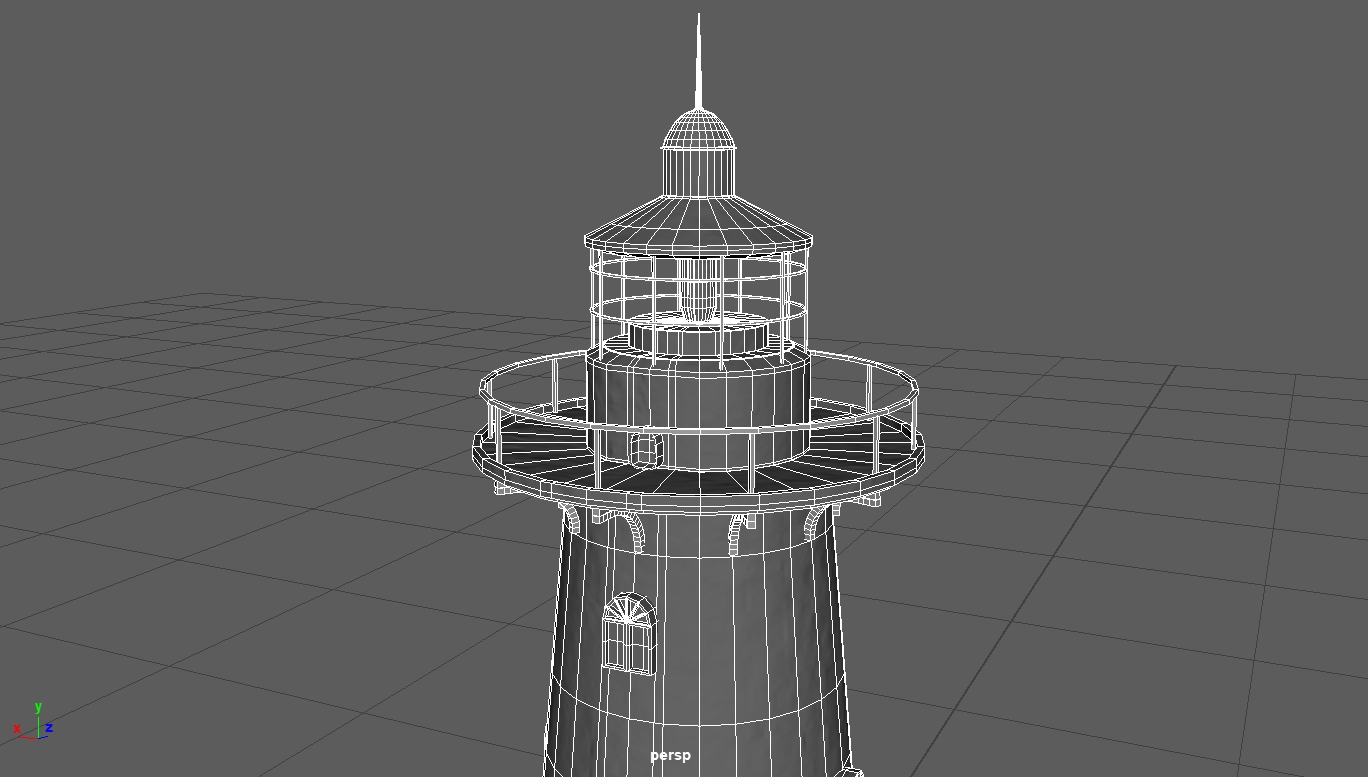
This is a 3D wireframe model of a Lighthouse, showing its structure and details for topology inspection
The last image presents the wireframe model of the lighthouse. The modeling process combined online references and personal sketches to ensure realistic proportions and details.
Symmetry and duplicate tools were utilized to streamline the design, and special attention was given to maintaining clean topology, avoiding N-gons for smooth rendering. Additionally, precise UV mapping was applied for seamless material placement, incorporating brick and concrete textures to enhance realism.
Captain
This is a segment of the final animation, showcasing part of the Captain's animation
The animation skillfully applies Disney’s Principles of Animation to create a compelling and emotionally charged sequence. As the Captain sees Kitty being swept away by the waves, his shock and urgency are immediately clear through Anticipation, his body tenses before he suddenly bursts out of the room. His movements follow natural Arcs, making his sprint feel fluid and realistic. As he reaches the water’s edge, his desperate leap is heightened through Squash & Stretch, with his body stretching mid-air before he barely manages to grasp the edge of the boat.
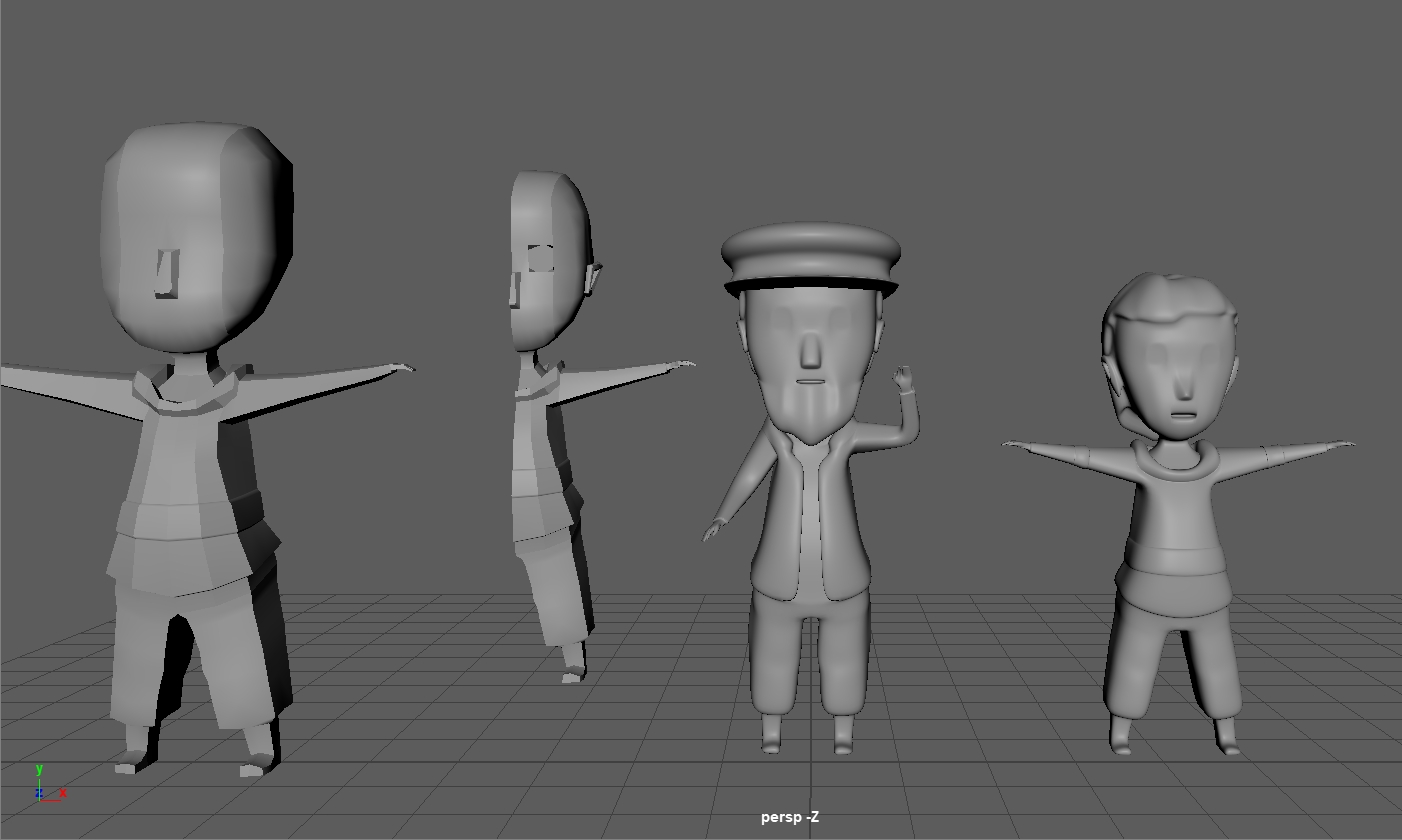
This is the initial version of the 3D Captain model
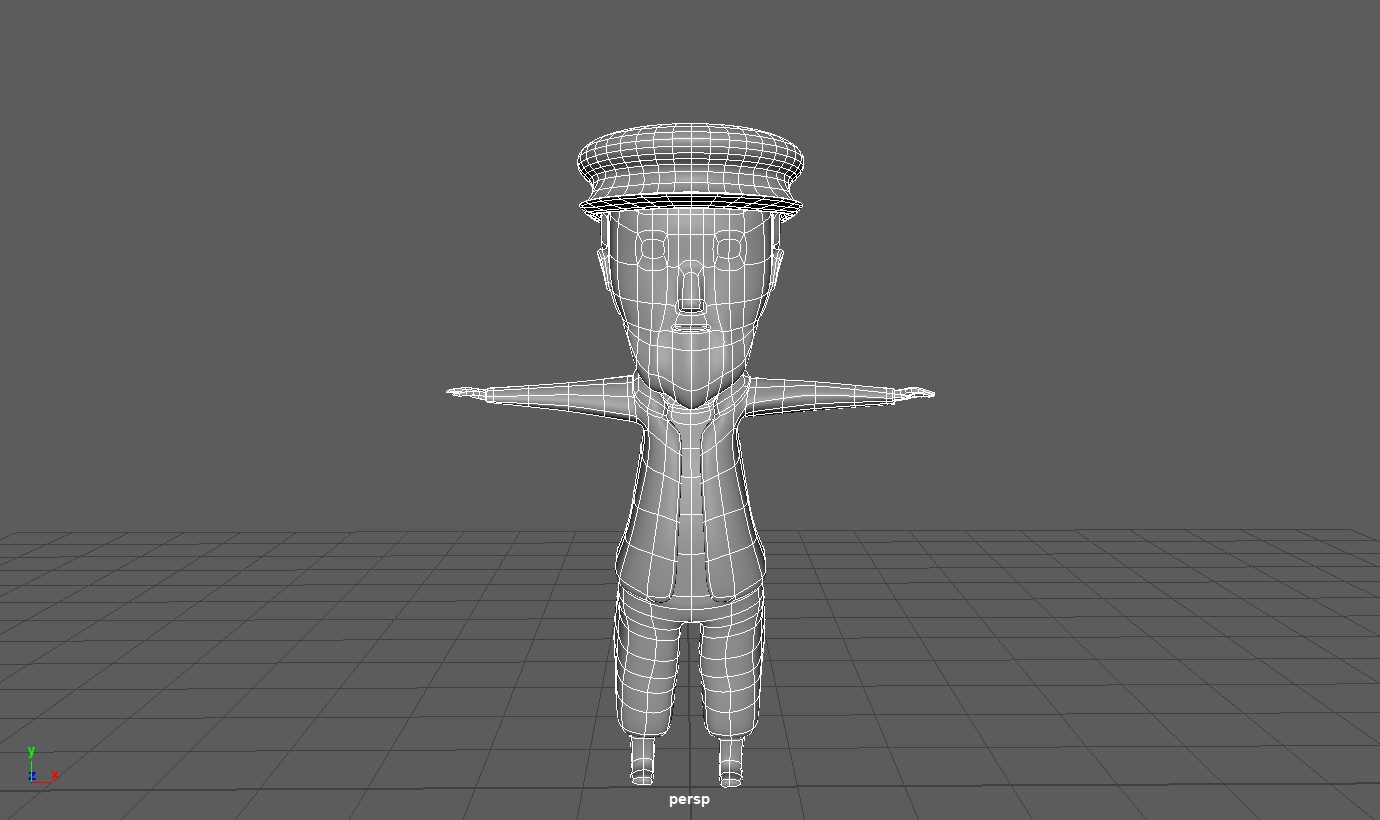
This is the wireframe model of the Captain, showing the 3D topology and mesh structure
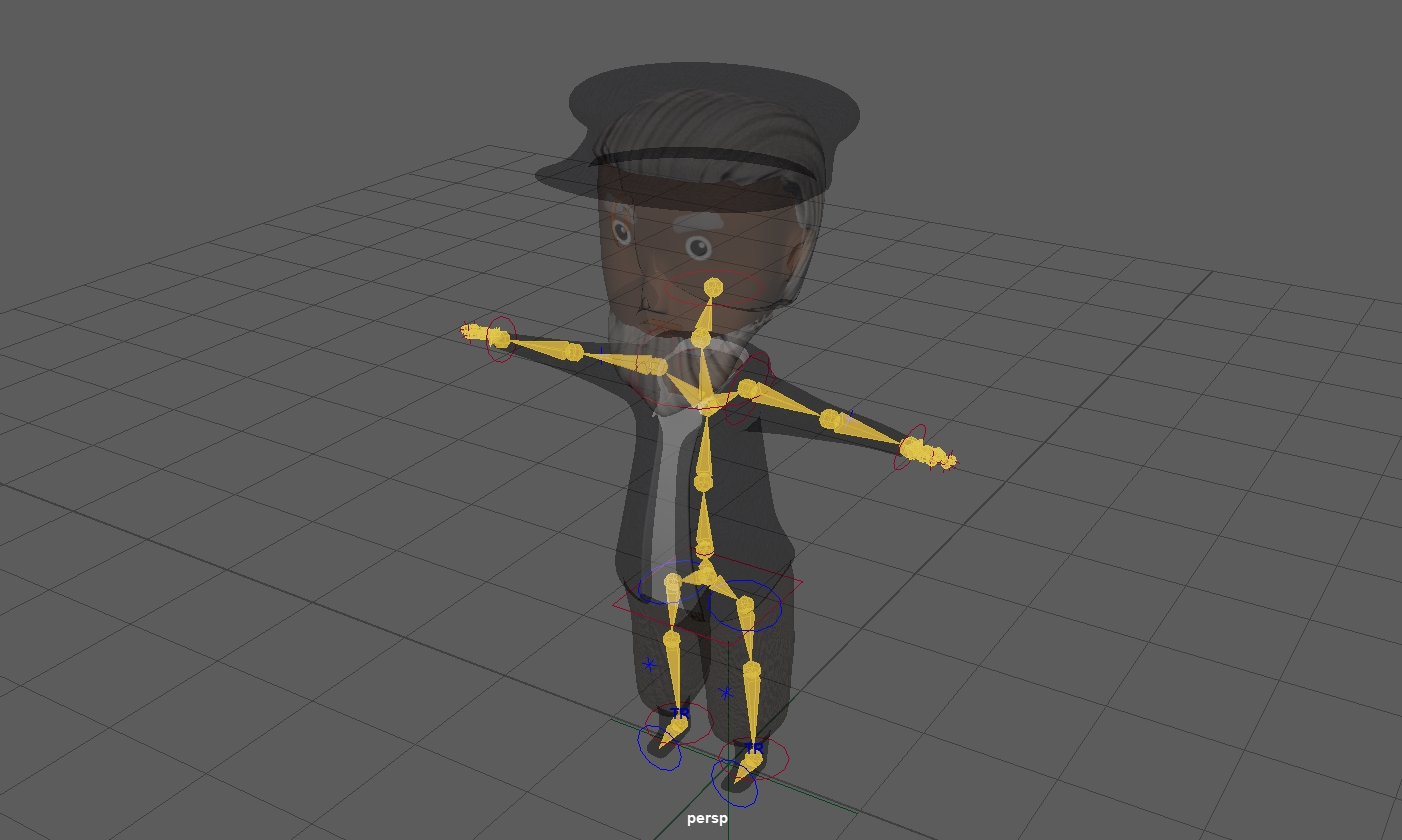
This is the rigging stage of the Captain, displaying the skeleton structure that has been embedded into the model
The following three images illustrate the Captain’s 3D model development in different stages. The character was modeled in Maya with a stylized yet expressive design, focusing on detailed facial features such as the beard and hat to reinforce his personality.
Precise UV mapping was conducted to ensure seamless texture application while minimizing distortion, allowing high-quality textures for clothing and skin. The texturing process emphasized material realism, carefully selecting fabric and skin details to enrich the visual storytelling. In the rigging stage, a complete skeleton was created to facilitate posing and animation. Skin weighting and paint skin weights were applied to ensure smooth deformations, enabling natural joint movements and expressive facial animations.
Kitty
This is a segment of the final animation, showcasing part of the Kitty's animation
As the waves begin to rise, Kitty’s Anticipation is evident through its wide eyes and tense posture. The animation emphasizes Exaggeration, especially in facial expressions and body movements, making its exciting and urgency more compelling. Squash & stretch subtly enhance realism as Kitty struggles against the shifting sand, reinforcing the sense of weight and resistance.
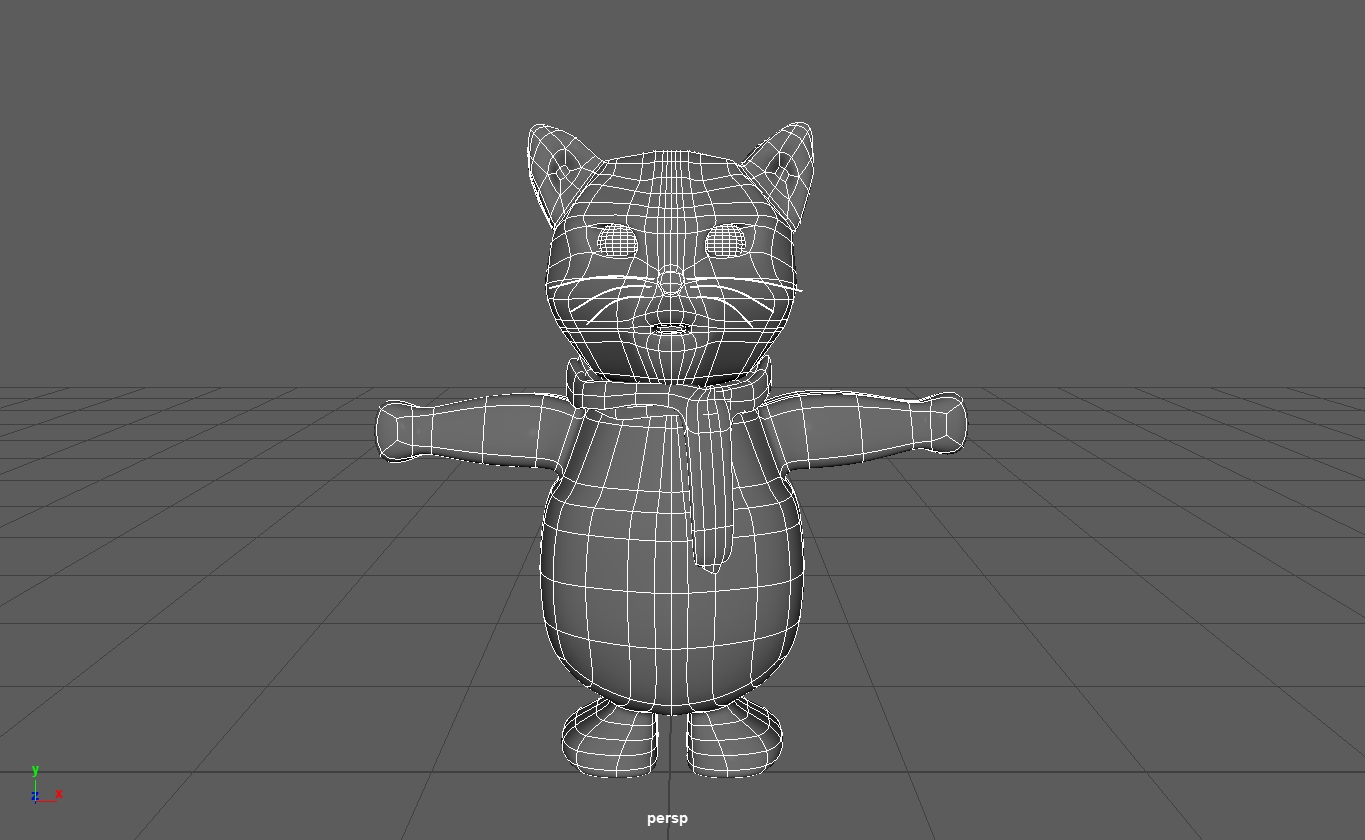
This is the wireframe model of the Kitty, showing the 3D topology and mesh structure
Focusing on smooth topology to allow clean deformations during animation. Expressive facial details were prioritized to make Kitty’s emotions more readable.
UV mapping was carefully unwrapped to minimize distortion, allowing seamless texture projection for the fur and scarf. The rigging process involved a basic skeleton setup, with careful painted skin weights to ensure smooth and natural deformations, particularly around the face and limbs, enabling expressive and fluid movement.
Takeaways
Working on Set Sail Again reinforced my understanding of storytelling through animation and the balance between stylization and realism. Bringing the Captain and Kitty to life required careful use of Anticipation, Exaggeration, and Squach & Strech, making their actions feel natural and emotionally engaging. I also deepened my technical skills in topology, UV mapping, and rigging, realizing how clean deformations and expressive movements rely on strong foundational modeling.
Looking back, I would refine secondary actions to enhance realism, such as having the Captain’s coat billow as he runs or his hat get blown away by the wind, adding more dynamism to his movements.